PACKNORI
Find a machine

16 machines

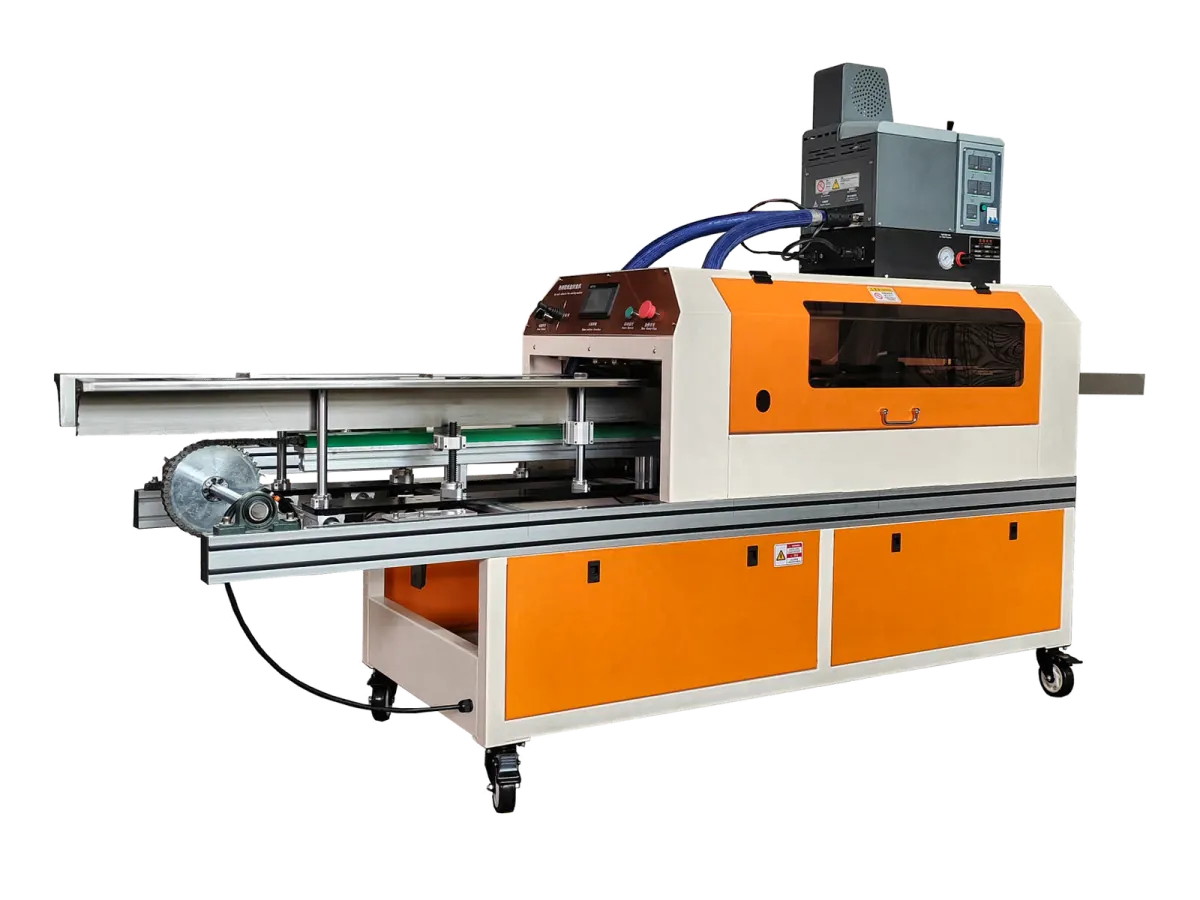
CK-E020-1 spray-glue carton sealer, illustrative 3D model: sealer body with the separate hot-melt unit on top

Hot-melt glue carton sealing machine

CK-E020-1 Spray-Glue Carton Sealing Machine

The spray-glue E020 configuration pairs the carton-processing body with a separate hot-melt unit. The supplied demonstration begins with a flat, empty carton; review filled-carton applications separately.

The sealer body with its separate hot-melt unit on top. Drag to turn it; tap a part to name it.

Machine size

2,945 × 700 × 1,160 mm

sealer body, L × W × H

Weight

300 kg

approximate

Power supply

220 V

50 Hz

Installed power

3.06 + 2.0 kW

sealer + glue unit

Prepared answers from the catalogue and the factory footage. Your carton, price and safety questions go to a person.

Enter your carton in catalogue order. The guides and the carton on the machine follow; the adjustment shown is illustrative.

CK-E020-1 catalogue range: A 100–300, B 60–200, C 30–90 mm.

220 × 150 × 60 mm is inside the CK-E020-1 catalogue range. That is a first screen, not a fit: axes, feed direction, flap layout and carton state still need checking with a sample.

Swipe sideways to turn the machine, tap a part to name it. Vertical swipes scroll the page.

Illustrative model. Housing, specifications and carton path follow the supplied photos, footage and catalogue; parts marked Illustrative are inferred. Actual configuration, carton fit and performance require engineering confirmation.

Will this carton path fit?

A semi-automatic hot-melt carton-sealing configuration with spray-glue delivery. The E020-1 and E022-1 list their sealer body and glue unit separately; include both when reviewing space.

This is the mid-size family. Use the catalogue dimensions to screen the carton, then confirm the dimension axes, feed orientation and flap layout.

Catalogue carton range
100–300 × 60–200 × 30–90 mm
Nominal output
40–70 cartons/min
Power supply
220 V · 50 Hz
Air / glue configuration
Approx. 0.5 MPa for the glue unit

Documented operation. The supplied footage begins with a flat, empty carton. It shows carton loading, conveying and pressing; it does not show a filled carton being sealed or test bond strength.

Not established by the catalogue. Your carton is not confirmed by dimensions alone. Confirm its empty or filled state at infeed, board and coating, flap sequence, glue seam, feed direction, stable output and the required acceptance check.

Top flaps down

Guides fold the upper end flaps as the carton moves past. Illustrative

Flap folding
2stages

Spray

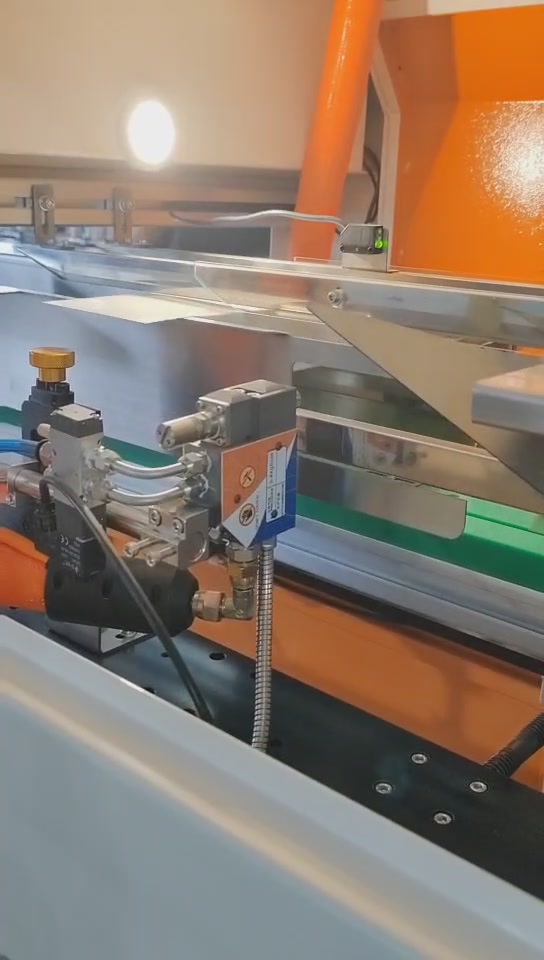
A photo sensor sees the carton arrive and a spray gun on each side applies hot-melt to the flaps. The adhesive comes from the separate glue unit through heated hoses. Illustrative positions

Sealing temperature
180–200°C
Glue unit
2.0kW · 7 kg tank

Bottom flaps up

The lower flaps fold up over the glued ones. Illustrative

Pressed shut

Plates hold the closed flaps while the adhesive sets. The supplied footage shows this pressing step. Plate layout: Illustrative

Outfeed

The sealed carton leaves on the outfeed chute.

Nominal output
40–70cartons/min
catalogue range, not measured

Technical specifications.

Nominal output40–70 cartons/min
Pack range100–300 × 60–200 × 30–90 mm
AutomationSemi-automatic
Power supply220 V · 50 Hz
Compressed airApprox. 0.5 MPa for the glue unit
Installed power3.06 kW cartoner + 2.0 kW glue unit
Sealing temperature180–200 °C
Machine sizeSealer body: 2,945 × 700 × 1,160 mm; separate glue unit: 460 × 310 × 640 mm
Approximate weightApprox. 300 kg
  • 01Integrated cartoner body with straightforward carton loading
  • 02Lower-frequency glue replenishment through a 7 kg tank
  • 03PID temperature control and automatic heat retention
  • 04Heated hose built around an 8 mm stainless-steel inner tube

Specification source: Power and separate body/glue-unit dimensions follow the CK-E020-1 parameter sheet. The 2025 summary lists a different 1,800 mm height; confirm the full installed envelope from the current layout.

Catalogue values are for planning. Confirm current configuration, dimension axes, carton fit and stable output against actual samples before a technical agreement.

The real machineSupplied photograph and factory footage

The model above follows this machine. Compare it with the supplied photograph, an evidence still and the working video.

Nominal output
40–70 cartons/min
Catalogue carton range
100–300 × 60–200 × 30–90 mm
Power supply
220 V · 50 Hz

Watch the
carton path.

A 40-second view of CK-E020-1: flat, empty carton loading, conveying and pressing, then the formed carton and adhesive location.

The footage does not demonstrate sealing after tissue filling or measure bond strength. Those questions need your actual carton.

See machine specifications →
CK-E020-1 · English narration & captionsOpen video
Read the demonstration summary

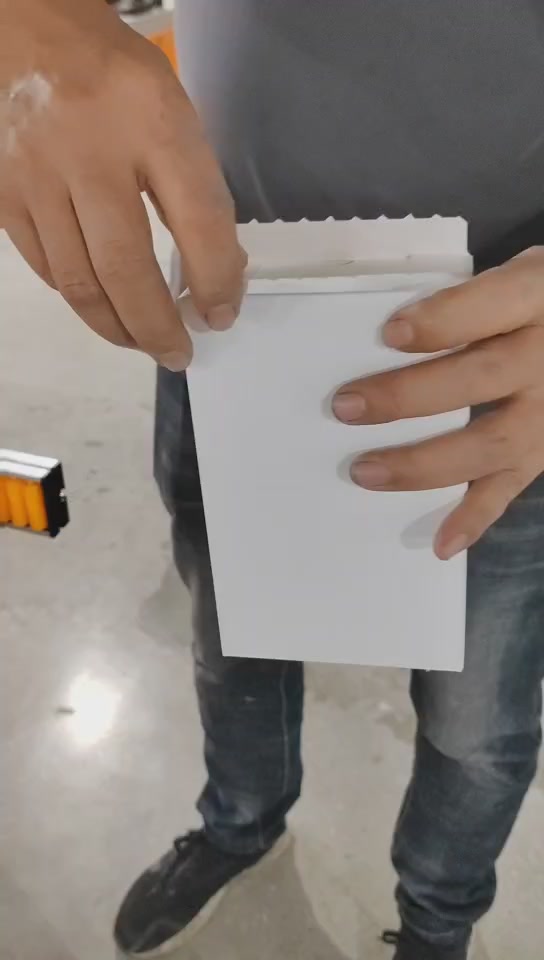
The operator loads a flat, empty carton between the feed rails. The video shows the control panel, conveying and actuator motion, followed by pressing. The formed empty carton is presented and the edge opened to expose the adhesive location. This is a visual inspection, not a bond-strength test. Catalogue values are not measured by this video.

Observed process · CK-E020-1

Watch before
you compare.

Choose a supplied factory step to review the actual carton handling sequence.

Actual factory footage00:01
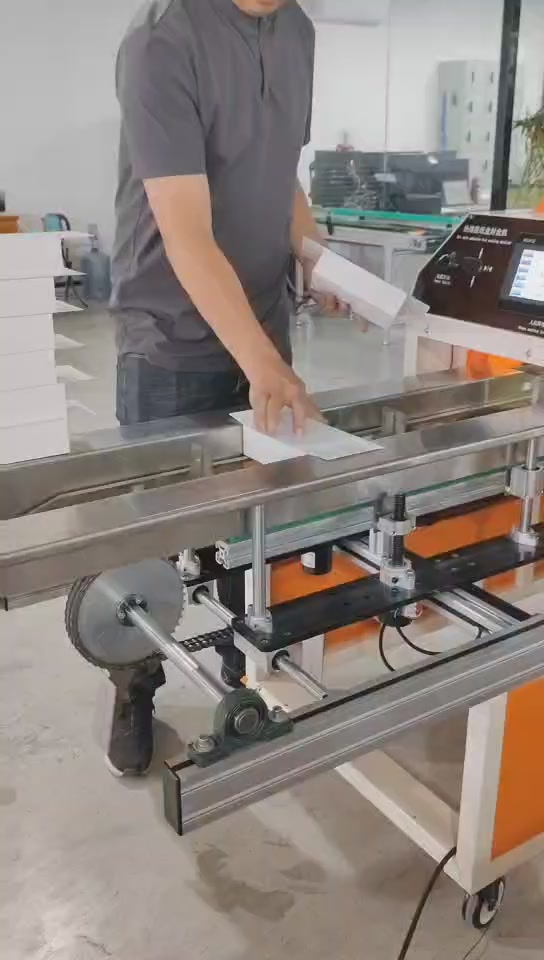
Load the flat, empty carton
01
Load the flat, empty carton

An operator places a flat, empty carton between the feed rails at the start of the supplied sequence.

Model shown: CK-E020-1

Four recorded moments

Still image selected. Clips load only when you choose Play.

Load the flat, empty carton
01 · 00:01

Load the flat, empty carton

An operator places a flat, empty carton between the feed rails at the start of the supplied sequence.

Convey and press
02 · 00:15

Convey and press

The carton moves through the processing and pressing area. This view records movement only; it does not establish bond strength.

Show the formed carton
03 · 00:22

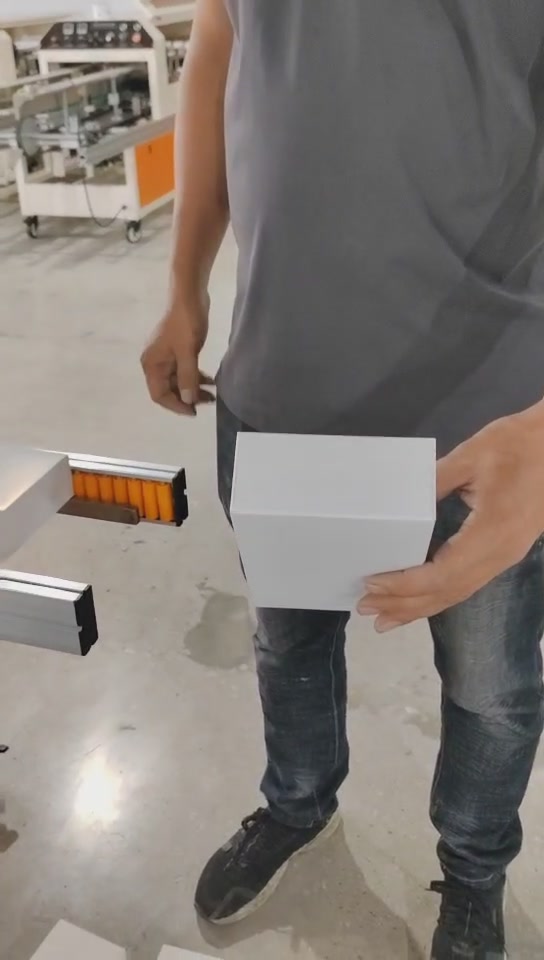
Show the formed carton

The operator presents the carton shape after the working sequence. It is a formed-carton view, not a filled-carton claim.

Inspect the adhesive location
04 · 00:36

Inspect the adhesive location

The carton edge is opened for a visual check of the adhesive location. The supplied footage does not test or quantify seal strength.

Evidence boundary

All four frames and clips are supplied CK-E020-1 factory footage. They do not show a filled carton, glue discharge, or a bond-strength test.

See the machine
in operation.

Raw demonstration: flat, empty carton infeed and a formed empty carton. Opening the seam shows adhesive location, not bond strength.

Tissue-carton process guide →

Food & medicine carton review →

CK-E020-1 · supplied working footageOpen video

Plan the change
into your line.

Replace or upgrade an existing sealer

Use this as a replacement review, not a drop-in promise. Record the current machine, carton format and complete cycle, then map the infeed, outfeed and control handoff.

  • 01

    Known here

    Supply: 220 V · 50 Hz. Air: Approx. 0.5 MPa for the glue unit. Machine size: Sealer body: 2,945 × 700 × 1,160 mm; separate glue unit: 460 × 310 × 640 mm.

  • 02

    Check at your site

    Available space, installed envelope, power connection, air and exhaust where relevant, guards, infeed/outfeed height and controls handoff.

Move a manual carton step to a machine

All six carton models are listed as semi-automatic. The catalogue supports a review of what an operator loads, how the carton is presented and how it leaves the machine; it does not state a staffing outcome.

For CK-E020-1 only, the supplied footage documents manual loading of a flat, empty carton before conveying and pressing.

Questions to close before an order

  • 01

    Changeover and glue

    How are format adjustments made? What cleaning method and glue handling routine apply to the agreed configuration?

  • 02

    Parts and documents

    Which wear parts, manuals, training, installation, support and warranty terms are included for this specific order?

  • 03

    Acceptance

    Which carton, seam result, output condition and line-interface check will be used to accept the selected configuration?

Questions buyers ask about CK-E020-1.

What carton sizes are listed for CK-E020-1?

The catalogue range is 100–300 × 60–200 × 30–90 mm, in catalogue order. Confirm dimension axes, feed direction and flap geometry against the actual carton.

Is 40–70 cartons/min a guaranteed production rate?

No. This is a nominal catalogue range. Stable output depends on carton handling, material, adhesive, loading and the agreed sample trial.

Can CK-E020-1 seal cartons after filling?

The CK-E020-1 demonstration starts with a flat, empty carton. Filled-carton sealing needs a separate review of the product, flap sequence and line interfaces.

Can food or medicine cartons be considered?

Yes, for a sample-led application review. Send the actual carton design, product-contact details and destination requirements. No sector-wide fit or certification is implied.

What should I send first?

Send open and closed carton photos, dieline, dimensions with feed direction, board/coating, glue seam, whether the carton is filled, and target stable output. Agree physical samples separately.

Can CK-E020-1 replace my current carton sealer?

A replacement cannot be assumed from the model name or catalogue dimensions. Compare the current carton format, complete cycle, infeed and outfeed, controls handoff, space, power and air with the proposed configuration.

What manual work remains with CK-E020-1?

This model is listed as semi-automatic. Confirm carton presentation, loading, handoff, inspection and format-change work for the actual process. The catalogue does not establish a staffing outcome.

Are the carton range and nominal output enough to approve the machine?

No. They are planning values. Confirm the dimension axes, feed direction, flap layout, carton state, adhesive seam, material and acceptance method with the actual sample.

What operating conditions should be confirmed before specifying CK-E020-1?

Review the stated 220 V · 50 Hz supply, approx. 0.5 mpa for the glue unit, the listed machine size, process interfaces and the current layout. Changeover, cleaning, parts, documentation, training, support and warranty scope must be agreed for the specific order.

How does CK-E020-1 seal the flaps?

It is a semi-automatic spray-glue configuration. A pusher carries the carton through; spray guns fed by the separate hot-melt unit apply adhesive to the end flaps, guides fold them and plates hold them closed. In the 3D model the guide sequence, gun positions and plates are illustrative. The supplied footage shows loading, conveying and pressing of an empty carton.

What does the hot-melt unit need?

It is a separate unit: 2.0 kW, approx. 0.5 MPa compressed air, a sealing temperature of 180–200 °C and a 7 kg glue tank, with PID temperature control and automatic heat retention. Include its 460 × 310 × 640 mm footprint in your layout.

What does it cost, and how soon can it ship?

Prices and lead times are not published on this site. They depend on the configuration and your carton, and are quoted for a specific order. Request a quote.

Can my team service the hot hoses or wiring?

Heated hoses, the glue unit and electrical parts are work for trained service staff following the equipment maker's procedure, with the machine isolated and cooled. We do not give repair steps here. Tell us what you see and we will reply.

Request a quote.

Tell us about your carton and line. We’ll review the requirements with you.

You can send photos or a dieline by email after submitting.

Send your inquiry directly to Packnori. You can also copy, download, or email a fallback draft.

If not measured yet, write Not measured; confirm before selection.
For filling or packing lines. Other and Not sure are valid choices.

Complete the required fields and consent, then send your inquiry. Your inquiry is sent only after you request a quote.